
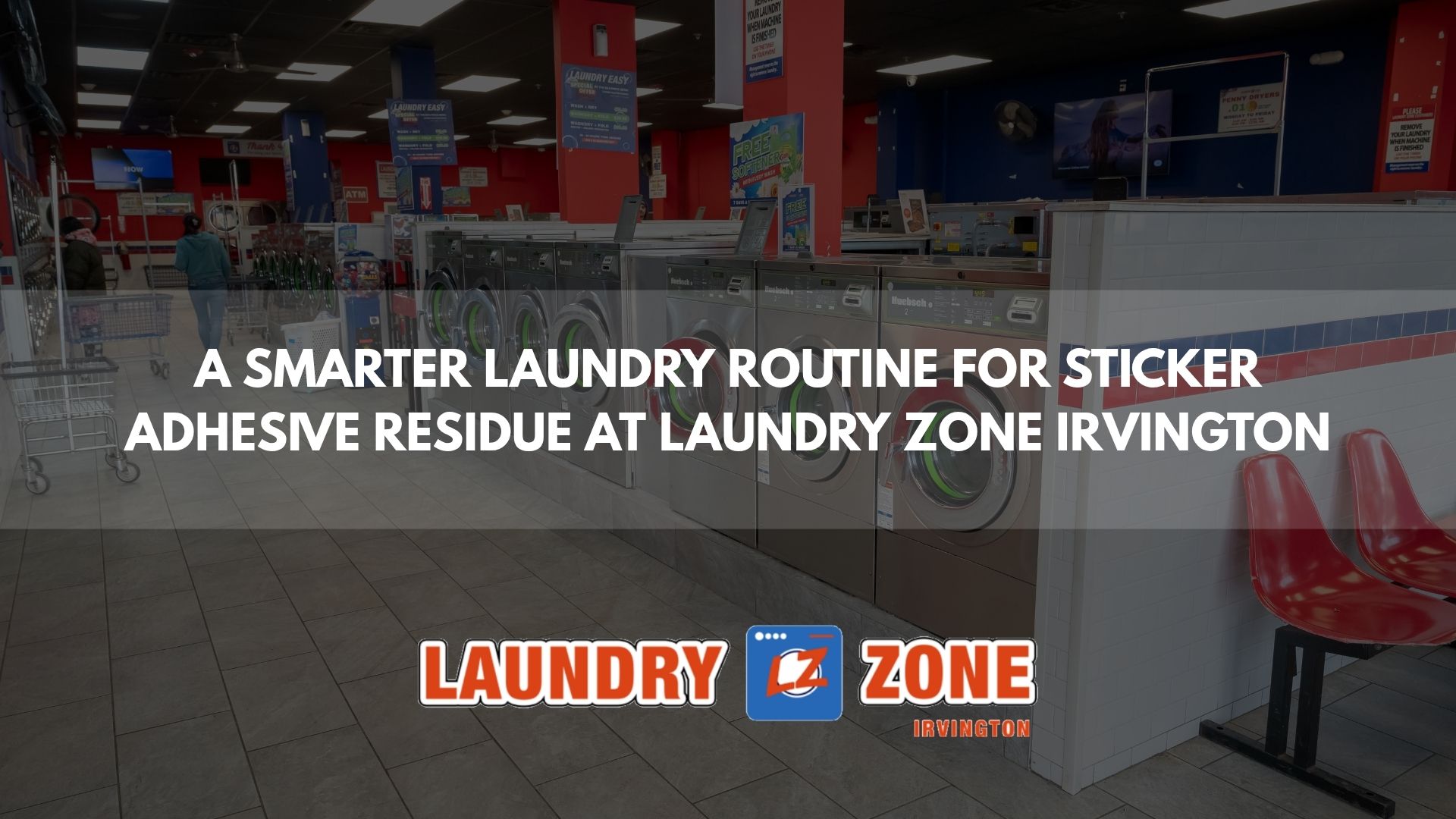
A Smarter Laundry Routine for Sticker Adhesive Residue at Laundry Zone Irvington
Sticker adhesive residue is one of those laundry problems that can catch you off guard. A garment may look perfectly fine until you notice a sticky area left behind by a label, price sticker, name tag, decorative sticker, or piece of tape.
The natural reaction is often to put the clothing straight into the washer and hope detergent takes care of it. Unfortunately, adhesive does not always respond like ordinary dirt or stains. Washing without preparation can leave residue behind, while applying heat before the adhesive is gone may make the problem more difficult.
A smarter laundry routine starts before the wash cycle. With a little inspection, proper fabric care, and thoughtful machine selection, you can handle sticker adhesive residue more effectively while protecting your clothing.
Whether you wash at home or use a self-service laundromat such as Laundry Zone Irvington, the following routine can help make adhesive-related laundry problems easier to manage.
Start With a Pre-Wash Inspection
The best time to find sticker residue is before clothing goes into the washer.
During sorting, look over garments that may have come into contact with stickers or labels. This is particularly helpful for children’s clothing, uniforms, craft clothing, and garments that have been around packaging materials.
Check areas such as:
- Shirt fronts
- Pant legs
- Sleeves
- Pockets
- Collars
- Waistbands
- Areas with recently attached labels
A few seconds of inspection can prevent an adhesive problem from becoming harder to handle later.
If you discover a sticker, do not simply toss the garment into the laundry load. Set it aside for treatment.
Remove the Sticker Without Damaging the Fabric
The next step is removing the visible sticker.
Start at an edge and gently peel the material away from the garment. Work gradually instead of pulling quickly. If the sticker tears, remove the remaining sections individually.
A dull edge can sometimes help lift stubborn pieces, but avoid sharp tools. Cutting or scraping aggressively can damage fibers and leave a permanent mark.
The objective is simple: remove as much of the sticker as possible without disturbing the fabric.
Once the sticker is gone, check whether a sticky layer remains.
Understand the Difference Between Sticker Material and Adhesive
It is useful to think of a sticker as having two separate problems.
The first is the sticker itself—the paper, plastic, or printed material attached to the clothing.
The second is the adhesive underneath it.
Removing the visible sticker does not necessarily remove the adhesive. The remaining residue may be transparent, tacky, glossy, or slightly hardened.
This distinction matters because washing may remove loose sticker material while leaving the adhesive attached to the fibers.
Treat the residue as a separate laundry-care issue.
Match the Treatment to the Fabric
There is no single treatment that is appropriate for every garment.
Begin by reading the care label. Consider the fabric composition and whether the garment contains printed graphics, decorative details, elastic fibers, or special finishes.
Before using a stain-treatment product, test it on a hidden area.
A small test can reveal whether the product affects:
- Fabric color
- Texture
- Printed designs
- Surface finish
- Fiber strength
If the test produces an unwanted change, choose another approach rather than continuing on the visible area.
Pretreat Before Starting the Wash
Once you have selected a fabric-appropriate treatment, address the adhesive before washing.
Apply the product according to its label directions. Focus on the affected area rather than unnecessarily covering the entire garment.
Gently work the treatment into the residue. Avoid forceful scrubbing because softened adhesive can spread across the surrounding fabric.
Allow the product to work as directed, then rinse or blot according to the instructions.
For stubborn residue, patience is often more useful than pressure. A careful second treatment may be preferable to aggressive rubbing.
Build Your Laundry Load Around Fabric Needs
After pretreatment, consider how the garment fits into the rest of your laundry.
Sorting by color is important, but fabric and care requirements also deserve attention. Avoid combining garments that require very different wash conditions simply because they are similar in color.
For example, consider separating:
- Delicate fabrics from sturdy everyday clothing
- Light colors from dark colors
- Items requiring different temperatures
- Garments with special care instructions
- Heavily soiled items from lightly soiled clothing
Good sorting helps you choose a wash setting that works for the entire load without unnecessarily stressing individual garments.
Select the Right Washer Size
The amount of clothing in a load should influence your machine selection.
Laundry needs room to move during washing. If a washer is packed too tightly, garments may have less opportunity to circulate through the water and detergent.
A machine that appropriately matches the load can support better movement and cleaning performance.
This is particularly useful for self-service laundry. At Laundry Zone Irvington, choosing a washer that fits the amount of clothing you are handling can make the washing process more organized and efficient.
The goal is not simply to fit everything into one machine. It is to create a load that can be cleaned effectively.
Choose Water Temperature Carefully
Temperature is another important part of a smart laundry routine.
A common misconception is that hotter water always produces cleaner clothing. In reality, the best temperature depends on the garment, care label, soil level, and wash requirements.
Excessive heat can contribute to:
- Shrinkage
- Fading
- Loss of shape
- Damage to sensitive fibers
- Changes in fabric texture
When adhesive is involved, unnecessary heat can also complicate residue removal.
Follow the garment’s care instructions and choose the most suitable setting rather than automatically selecting the highest temperature.
Use Detergent Strategically
Detergent is an important part of washing, but using more does not necessarily improve results.
Too much detergent can leave residue behind and may make rinsing more difficult. Follow the product’s recommended amount based on the load and washing conditions.
For sticker adhesive residue, the most important work often happens before the wash. Pretreatment helps address the adhesive directly, while detergent and mechanical action contribute to the overall cleaning process.
A balanced approach is generally more effective than relying on excessive cleaning product.
Treat the Washer as Part of a Larger Process
A washing machine provides several cleaning mechanisms at once.
Water helps carry loosened material away. Detergent interacts with soils. Mechanical movement helps separate contaminants from fabric. Rinsing removes suspended residue.
But these processes work best when the clothing has been properly prepared.
If adhesive remains strongly attached to the fabric before washing, the washer may not be able to remove it completely. Pretreatment gives the wash cycle a better starting point.
This is why laundry efficiency is not just about machine performance. It is also about what you do before and after the cycle.
Inspect Before Drying
Once washing is complete, resist the temptation to move directly to drying.
Check the area where the sticker residue was located.
Look and feel for:
- Remaining tackiness
- Shiny spots
- Paper fragments
- Stiffness
- Discoloration
- Changes in texture
If any adhesive remains, repeat the appropriate treatment before drying.
This step is especially important because heat can affect certain adhesives.
Why Heat Can Make Residue More Difficult
Some adhesives become softer when heated. If residue is still present, a heated drying process may cause it to spread or become more firmly attached to fabric.
By inspecting the garment while it is still damp, you have another opportunity to correct the problem before heat is introduced.
This simple checkpoint can save you from unnecessary additional work.
Avoid These Common Laundry Shortcuts
A smarter routine also means knowing which shortcuts to avoid.
Do not ignore small adhesive spots
Small areas can become more noticeable after washing. Address them early.
Do not scrape with sharp objects
Sharp tools can cut or snag fibers.
Do not mix cleaning products randomly
Different products may not be compatible. Follow their individual directions.
Do not use excessive detergent
More detergent is not a substitute for proper pretreatment.
Do not automatically choose the hottest wash setting
Temperature should match the garment’s care requirements.
Do not dry before inspecting
If adhesive remains, heat may make the problem harder to resolve.
Turn the Process Into a Repeatable Routine
A good laundry routine becomes easier when you use the same basic sequence each time.
Think of adhesive management as five stages:
Inspect → Remove → Treat → Wash → Check
First, inspect the garment.
Next, remove visible sticker material.
Then pretreat the remaining adhesive.
After that, wash using the appropriate machine and settings.
Finally, check the garment before drying.
This simple sequence can reduce guesswork and make laundry more consistent.
Make Self-Service Laundry More Efficient
Self-service laundry can be especially convenient when you have multiple garments or larger loads to manage. However, efficiency still depends on preparation.
Arriving with clothing already sorted and adhesive residue identified allows you to spend less time making decisions during the washing process.
Laundry Zone Irvington can fit naturally into this type of routine. By combining proper preparation with appropriate machine selection and fabric-care practices, you can approach each load with a clear plan.
The result is a laundry process that feels less rushed and more organized.
Conclusion
Sticker adhesive residue does not have to derail your laundry routine. The most effective solution is often a series of simple decisions made at the right stages.
Inspect clothing before washing, remove stickers carefully, identify the fabric, test your treatment, and pretreat the residue. Select a washer that fits the load, use the recommended detergent amount, and choose a temperature appropriate for the garment.
Most importantly, inspect the clothing after washing and before drying. If adhesive remains, treat it again instead of immediately applying heat.
With these habits, you can improve laundry efficiency, protect fabrics, and reduce the frustration of stubborn adhesive residue. When you need a convenient place to put those habits into practice, Laundry Zone Irvington can be part of a cleaner, more organized self-service laundry routine.
Recent Posts
- Metallic Thread Care: Expert Tips for Cleaner Results with Laundry Zone Irvington
- What to Know About Caring for Sewn-on Appliqué Decoration at Laundry Zone Irvington
- Handling Lace Trim and Detail Gently with Laundry Zone Irvington
- Everything You Need to Know About Embroidered Clothing Care at Laundry Zone Irvington
- Protecting Delicate Sequins and Beading in the Wash with Laundry Zone Irvington
Recent Comments
No comments to show.
Tags
- all services Laundry Zone
- best laundromat in Irvington NJ
- best laundromat Irvington
- clean laundromat
- coinless laundromat Irvington
- commercial laundry services
- cost-effective laundry service
- east orange
- eco-friendly laundry Irvington
- express laundry
- family-friendly laundromat
- family friendly laundromat Essex County
- family laundry
- high-efficiency washers
- hillside
- Huebsch washers Irvington
- Irvington laundromat
- Irvington NJ
- Irvington NJ laundromat
- Irvington NJ laundry
- laundromat Irvington NJ
- laundry business efficiency
- laundry hygiene
- laundry near me
- laundry pickup delivery Irvington
- Laundry promotions Irvington
- laundry service
- laundry tips
- laundry zone irvington
- laundryzoneirvington.com booking
- laundry zone irvington complete info
- Laundry Zone Irvington NJ guide
- maplewood
- newark
- outsourcing laundry
- professional laundry care
- self-service laundry
- Self-service laundry Irvington
- time-saving laundry
- time-saving laundry solutions
- union
- wash and fold
- wash and fold Irvington
- Wash and fold Irvington NJ
- wash and fold services